We are often admonished to notrepeat the troublesome parts of history. The admonition presupposes that we know all those parts of history. But sometimes, parts of troubling histories areoverlooked or minimized.
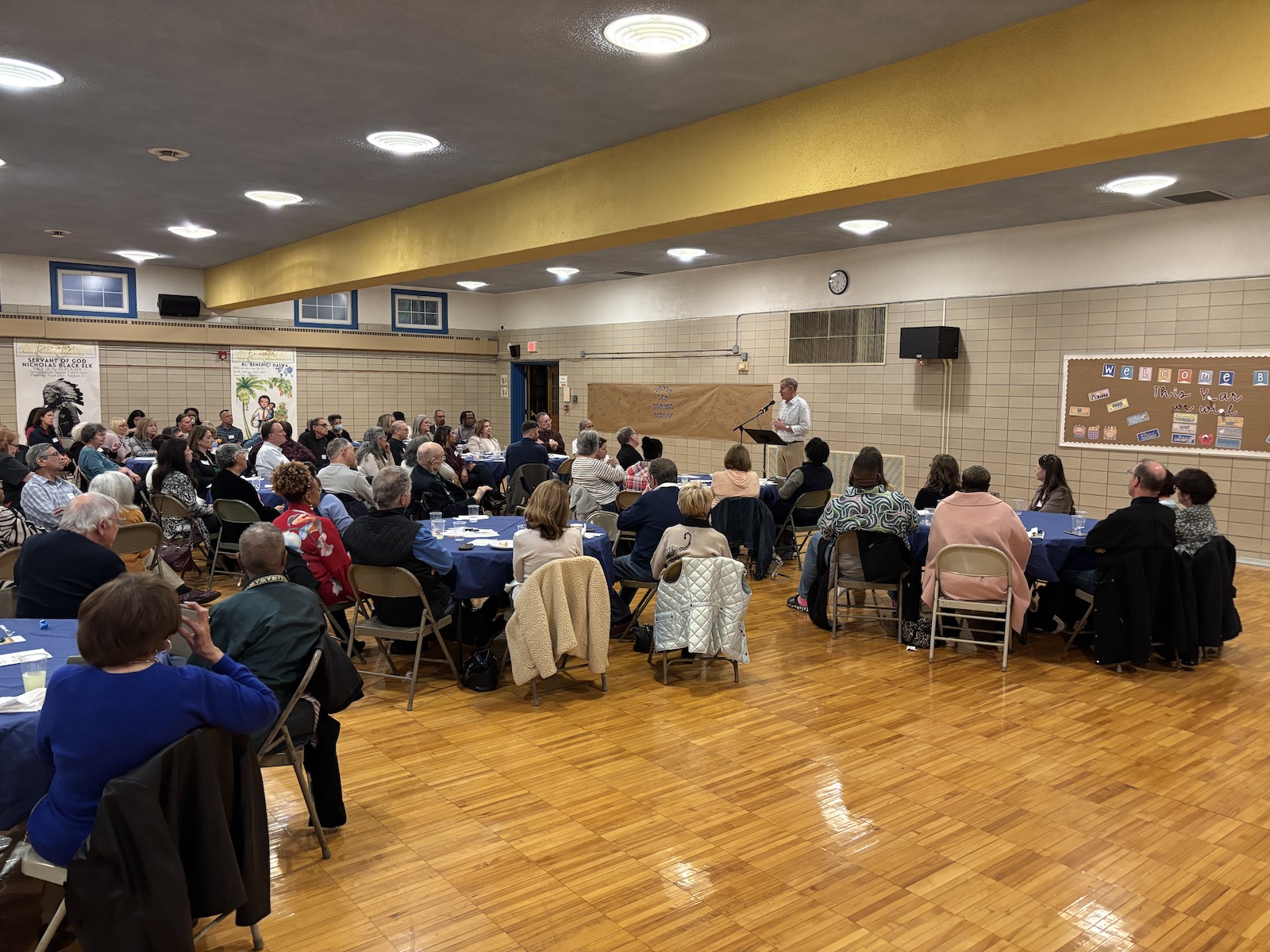
On Nov. 2, St. Dominicparishioners and guests from neighboring churches shared an evening oflearning, listening, and reflecting in celebration of Black Catholic HistoryMonth. The event was titled “TowardsHealing: Overcoming the Sin of Racism inour Catholic Church.” Fr. Tom presenteda “Cliff Notes” summation of a presentation he attended by Dr. Jeannine Hill Fletcher,a theology professor at Fordham University. Dr. Hill Fletcher’s presentation focused onthe Catholic Church’s role in our nation’s history with racism.
We all at least generically know aboutracism, but often as a nation and Church we have not taken deep dives. Fr. Tom discussed three periods of pain inour history that have caused trauma, and in which the Catholic Church participated: (1) the discovery of America; (2) the economyof slavery; and (3) the protection of White supremacy.
The facts he shared wereeye-opening. Did you know that Indigenous peoples’ first encounter withEuropeans was through the Catholic Church? How much do you know about the abuses suffered by children attending Catholic-run“Indian” boarding schools, some of which existed until the 1960s?
Did you know that the CatholicChurch was the largest corporate holder of slaves in the United States? Or that the Knights of Peter Claver wasfounded for Black Catholic men because they were not permitted to join theKnights of Columbus?
Some say, “Well, these injusticeswere in the past. Look at how much progress we have made, so why are we stilltalking about this?” This thinkingoversimplifies a complex situation. Theeffects of structural racism are multigenerational. Fr. Tom gave the example of the GI Bill,which was aimed at helping World War II veterans start their postwarlives. By and large, Black veterans who had served this country (in segregatedranks) were foreclosed from the benefits of the Bill. The lack of access to the benefits deprivedBlack veterans and their families of home ownership and post-secondary educationalopportunities, which are significant drivers of creating generational wealth.
Fr. Tom shared four takeawaysfrom the presentation for those committed to addressing what he calls “the sinof racism”, suggesting that we:
1. tell the truth about both our country and thechurch’s role in racism;
2. work to understand the pain;
3. work to heal the pain; and
4. work to transcend the pain.
That evening, as we discussed theinjustices of racism, some participants reflected that they were “sad” or“embarrassed.” And while these arenatural feelings, the goal is not to make people feel bad. The goal is to learn, understand, heal, andtranscend. We can do it together! We hope that you will keep your eyes open formore events sponsored by the Racial Equity Task Force and consider joining in!