Below you will find a collection of videos that are intended to foster thought and discussion within the Church of St. Dominic community.
Pope Leo Makes Historic Apology for Catholic Church's Slavery Role

On Monday, May 25, Pope Leo made a historic statement apologizing for the Catholic Church's role in perpetrating slavery and condemning the actions of past popes who helped give European rulers the authority to subjugate people.
You might not have heard about this. The statement didn't make a lot of news headlines in the U.S., perhaps because it happened on the Memorial Day holiday. Also, the statement was just one part of the pope's first major encyclical, Magnifica Humanitas, or Magnificent Humanity.
But it was a powerful apology that extended well beyond any prior pope's admission and directly addressed how the Catholic Church provided religious cover for the inhumane practice of slavery.
Learn more by reading the National Catholic Reporter's story below.
The “Saintly Seven”

Black History Month is a great time to learn about the “Saintly Seven” – seven African-American men and women who are on the path to Catholic sainthood. Each of them lived lives rooted in deep faith, service, and commitment to God despite facing racism and hardships.
Below, the Racial Equity Task Force has provided thumbnail biographies for these seven holy men and women: Servant of God Sister Thea Bowman, Venerable Henriette DeLille, Venerable Pierre Toussaint, Venerable Mother Mary Lange, Venerable Father Augustus Tolton, Servant of God Julia Greeley, and Servant of God Friar Martin de Porres Maria Ward.
We give thanks for their representation of the rich history of Black Catholicism and dedicated service to the Church and its people.
Servant of God Sister Thea Bowman (1937-1990)
Sister Thea was born in 1937 in Mississippi, where she was raised. As a young girl, she attended Methodist church with her parents. Sister Thea was educated by the Franciscan Sisters of Perpetual Adoration and it was their influence that taught and nurtured her faith. At the age of nine, she converted to Catholicism and at the age of 15 she joined their order, becoming the first African-American woman in the order. Sr. Thea was a gifted speaker and musician. She was committed to the richness of African-American culture and brought a new awareness of it to the Catholic Church. In 2018, Sr. Thea was officially recognized by the Vatican as a Servant of God.
Venerable Henriette DeLille (1813-1862)
Sister Henriette was born in 1813 in New Orleans as a free woman. She experienced a religious conversion when she was 24 years old and proclaimed “I want to live and die for God.” Sister Henriette focused her life on helping the enslaved, elderly, and sick, as well as caring for and educating the poor. She founded the Society of the Holy Family and dedicated her life to those purposes. Sister Henriette was the first Mother Superior of the order. Pope Benedict XVI declared her Venerable in 2010.
Venerable Pierre Toussaint (1766-1853)
Pierre was born enslaved in 1766 in modern-day Haiti and brought to New York City. He was legally freed from slavery in 1807, following the death of his enslaver. Pierre was deeply committed to caring for others, including orphans, immigrants, and the sick during cholera outbreaks. He was a daily communicant at St. Peter Church in New York and he raised funds to build the original St. Patrick’s Cathedral and St. Vincent de Paul Church. The late Cardinal Terence Cooke introduced Pierre’s cause for canonization at the Vatican in 1968. In 1989, the late Cardinal John O’Connor had Pierre’s remains transferred to St. Patrick’s Cathedral. Pierre was declared Venerable in 1997 by Pope John Paul II.
Venerable Mother Mary Lange (C. 1789-1882)
Mother Mary was born around 1789 in Haiti and lived in Cuba with her family after their escape during the Haitian Revolution. She settled in Baltimore in the early 1800s, and in 1829, founded the Oblate Sisters of Providence, the first religious order for African-American women. The order was dedicated to providing education and spiritual formation for Black youth. Mother Mary’s cause for canonization was opened in 1991, and she was declared Venerable by Pope Francis in 2023.
VenerableFather Augustus Tolton (1854-1897)
Father Tolton was born into slavery in 1854 in Missouri. Father Tolton’s family escaped slavery in 1863 and settled in Quincy, Ill. Father Tolton excelled in academics and graduated as the valedictorian of his class at St. Francis Solanus College, now known as Quincy University. He wanted to become a priest but was rejected by seminaries in the United States. He eventually was accepted into a seminary in Rome, where he was ordained and said his first Mass in St. Peter’s Basilica. After ordination, Father Tolton returned to the United States where he was the first publicly recognized African-American priest. Much of Father Tolton’s service was at St. Monica Church in Chicago, where he ministered the city’s Black Catholics. In 2019, Pope Francis declared Father Tolton Venerable.
Servant of God Julia Greeley (C. 1833-1918)
Julia was born into slavery in Missouri and later gained her freedom in 1863 . She moved to Denver, where she worked tirelessly assisting the poor. Despite being of limited means, Julia gave away most of what she had to those less fortunate than herself. She became known as the “angel of charity.” Julia had a deep devotion to the Sacred Heart of Jesus and in 1901, she entered the Secular Franciscan Order. Her cause for sainthood was opened in 2014, and she is a Servant of God.
Servant of God Friar Martin de Porres Maria Ward (1918-1999)
Friar Martin was born into a Methodist family in 1918 in Boston. His family moved to Washington, D.C., where he began attending a historical Black Catholic church. At age 17, he converted to Catholicism. In 1945, he joined the Conventual Franciscan Friars; he was the first African American in the order. He faced racism in the United States and went to Brazil, where he ministered for over four decades. Friar Martin dedicated himself to the Brazilian people in his community, especially the poor. Friar Martin’s cause for canonization was promoted by his order in 2020.
Recommended Viewing: The “13th” Documentary
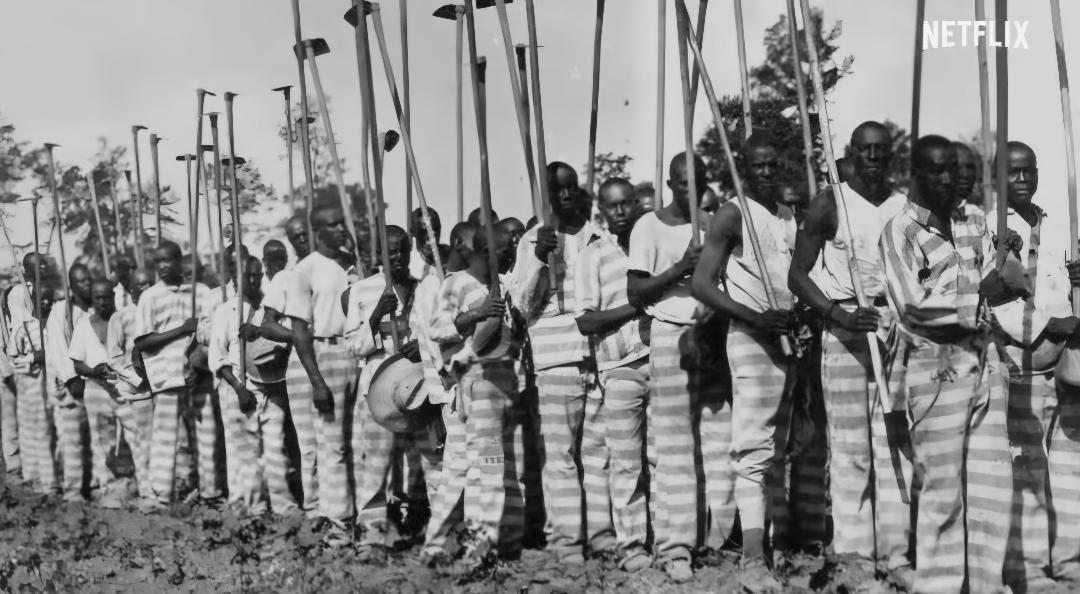
When I first watched the documentary “13th” by filmmaker Ava DuVernay in 2016, its message jarred me and remains with me 10 years later. I recently rewatched the film to write this reflection and found the message to be even more relevant in today’s United States.
The title “13th” refers to the 13th amendment to the US Constitution which formally abolished slavery and involuntary servitude, except as a punishment for a crime. The film explicitly challenges the premise that slavery and involuntary servitude has, in fact, been abolished and instead posits: “Throughout American history, African Americans have repeatedly been controlled through systems of racial and social control that appear to die but then are reborn in new form, tailored to the needs and constraints of the time.” A through-line is traced from slavery to convict leasing to Jim Crow, to today’s mass incarceration and released felons being stripped of citizenship rights for life.
Each of these entrenched systems punish(ed) people of color solely or disproportionately, and financially benefit(ted) segments of the U.S. economy. Because the people punished are often “othered” and the financial beneficiaries are powerful, the systems remain both out of sight to most of us and deeply entrenched.
For those of us living comfortable lives untouched by this system, it’s easy to look away, but “13th” gets your attention with jaw-dropping statistics about mass incarceration, including:
- The U.S. has 5% of the world’s population but roughly 25% of the world’s prisoners, giving us the highest rate of incarceration in the world.
- Black men make up 6.5% of the U.S. population but 40.2% of the prison population.
- Even when the debt to society has been repaid and prisoners are released, the “convicted felon” label prevents them from voting and getting most jobs, leases or loans.
- The prison industrial complex is defined as mass incarceration and the people who profit from it. This includes private prison companies (should prison have a profit motive?), but also vendors like phone companies, food service, and health care, many of whom inflate prices and are paid regardless of services provided.
- Prison labor is a multi-billion dollar industry used by well-known companies. Prison labor has been equated to slave labor.
The film also counters those who would feel justified ignoring mass incarceration because “they (the prisoners) forfeited their rights by committing crimes.” First, this ignores that we are all humans and children of God. Secondly, “13th” provides compelling evidence that many imprisoned people are there because they are poor, not because they are guilty. There is too much detail to describe here, but I found the arguments compelling and shocking.
Lastly, I found the film prescient in describing immigrant detention centers as “prisons for immigrants” and raising the alarm about the privatization of them. Just like prisons, they need to stay full to keep generating profits. The film was made in 2016 and we can see this playing out in our country today.
I’ve only touched on the complexities the film explores. To see what resonates with you, I encourage you to watch it and if so moved, share it with your people.
13th is streaming on Netflix. An Oprah Winfrey interview with the filmmaker is also available on Netflix.
Let's Learn About Thea Bowman's Journey to Sainthood
%20(1).png)
Recommended viewing: “Going Home Like a Shooting Star: Thea Bowman’s Journey to Sainthood”. To watch it on YouTube; click here.
The name Thea Bowman may be a familiar one to you – mainly because many St. Dominic parishioners volunteer at the Thea Bowman Center in Cleveland’s Mount Pleasant neighborhood. The center provides hot meals, G.E.D.training, food assistance, and other resources for the underserved population in the community.
But how much do you know about the center’s namesake? Sister Thea Bowman was an African-American Franciscan nun. She was an educator for a number of years and, after that, Sr. Thea was named a consultant for intercultural awareness by the Diocese of Jackson, Miss. As a consultant, Sr. Thea challenged the Catholic Church — and society in general — to grow in racial inclusivity. She gave presentations across the U.S. encouraging open communication among people of different races and cultural backgrounds with the goal of breaking down barriers. Sr. Thea died in 1990, and in 2018, the Diocese of Jackson, Miss., opened the cause for her canonization, giving her the designation of Servant of God, the first step toward the Church’s official recognition of a saint. At the 2018 U.S. Conference ofCatholic Bishops’ Fall General Assembly, the Committee on Canonical Affairs and Church Governance indicated unanimous support for the advancement of Sr. Thea’s canonization cause. On Saturday, Feb. 7, 2026, St. Dominic hosted a community dinner and dialogue on “Thea Bowman: Embracing the Diversity of the Catholic Church.” If you missed the event but would still like to view the video, please click here to view it.
St. Dominic Dialogue Conversation Video
